The Violet Webcap Mushroom: A Complete Guide to Cortinarius Violaceus
Introduction to the Enigmatic Forest Dweller
Among the most visually striking fungi in temperate woodlands, the violet webcap mushroom (Cortinarius violaceus) stands out with its extraordinary deep purple coloration. This distinctive mushroom, belonging to the large and complex Cortinarius genus, captures the imagination of foragers and mycologists alike. Found primarily in coniferous and mixed forests across the Northern Hemisphere, it plays a specific role in forest ecosystems. While it holds a place in some foraging guides, it is surrounded by necessary cautions and considerations that every mushroom enthusiast must understand.
Identification: Recognizing the Violet Webcap
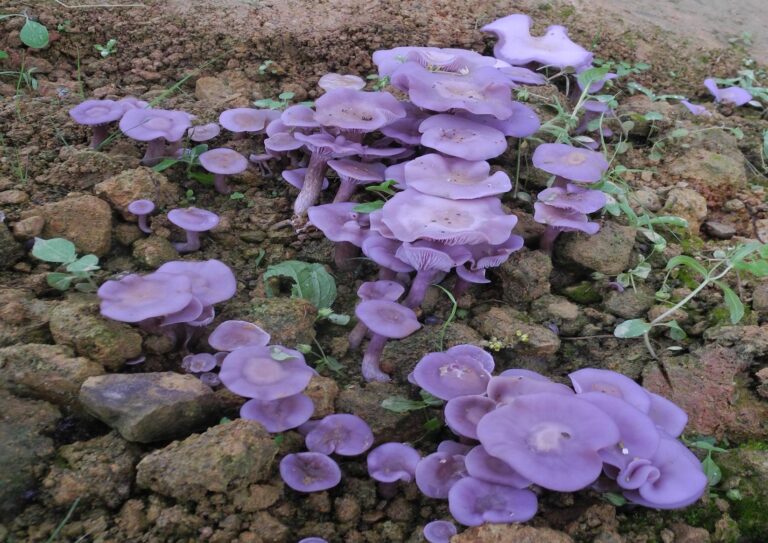
Correctly identifying Cortinarius violaceus requires attention to multiple features. The violet webcap mushroom produces a cap that typically ranges from 5 to 12 centimeters in diameter. Initially convex, it flattens with age, often developing a broad umbo (central bump). Its most defining characteristic is its color: a deep, velvety violet to purple-black hue that can fade to a more brownish-lilac with age or in drier conditions.
The violet webcap mushroom gills are adnate (broadly attached) and share the same vivid violet color when young, maturing to a rusty brown as the spores develop. A crucial identification feature is the cortina—a delicate, web-like veil that stretches from the cap’s edge to the stem in young specimens, often leaving faint remnants on the mature stem. The stem is fibrous and often has a bulbous base. A spore print, which is a rusty brown color, is a key diagnostic tool. Learn the fundamentals of safe identification with our guide to mushroom field characteristics.
Habitat, Ecology, and Distribution
violet webcap mushroom :This fungus forms a mycorrhizal relationship with trees, meaning it lives in a symbiotic partnership with the roots of certain species. It is most commonly associated with spruce, pine, and beech trees in old-growth or established woodlands. It prefers acidic, humus-rich soils and is typically found from late summer through autumn. While it has a wide distribution across Europe, Asia, and North America, it is never considered common and is listed as a protected or vulnerable species in several European countries due to habitat loss and pollution sensitivity. Its presence is often an indicator of a healthy, mature forest ecosystem.
The Critical Question: Edibility and Toxicity
This is the most important section for any forager. While listed as edible in some older field guides, Cortinarius violaceus is generally not recommended for consumption today. The primary reasons for this strong caution are:
- Toxic Lookalikes: The Cortinarius genus contains some of the most dangerously toxic mushrooms known, including species that cause fatal kidney failure (e.g., Cortinarius rubellus, the Deadly Webcap). The rusty brown spore print is a hallmark of the entire genus. Misidentification within this group can have severe, irreversible consequences.
- Variable Edibility Reports: Even when correctly identified, its edibility is debated. Some sources report it as edible but of mediocre or poor culinary quality, sometimes described as bitter or radish-like. Others note that it can cause gastrointestinal distress in some individuals.
- Conservation Status: Given its scarcity in many regions, collecting it for the table is ethically questionable. The best practice is to admire its beauty in its natural habitat without disturbance.
The Purple Puzzle: Lookalikes and Similar Species
Safe mushroom foraging hinges on knowing what a mushroom is not. Key species to distinguish from the violet webcap include:
- Lepista nuda (Wood Blewit): This popular edible also has violet coloring. Key differences: the blewit lacks a cortina, has a pale, smooth stem, and produces a pale pinkish-buff spore print, not rusty brown. It often grows in leaf litter, sometimes in gardens.
- Cortinarius purpurascens: A similar purple Cortinarius species. It bruises a deep purple-red and typically has a more scaly stem. It is also considered of uncertain edibility and best avoided.
- Other Purple Cortinarius Species: The genus contains dozens of purple-tinged species, many of which are toxic. Only advanced study with microscopic analysis can reliably separate some of them.
The Golden Rule: Unless you are an expert mycologist with microscopic tools, it is safest to enjoy purple mushrooms in the Cortinarius genus for their beauty only, not for the pot. Explore the challenges of identifying mushroom lookalikes.
Cultural Significance and Folklore
While not a major feature of culinary traditions due to its uncertain status, the violet webcap’s remarkable appearance has earned it a place in natural history and folklore. Its striking color, unusual in the natural world, has made it a subject of interest for artists and photographers. In some European folk traditions, brightly colored mushrooms were often associated with fairy rings and supernatural beings, though specific lore for this species is limited. Its scientific name, violaceus, simply means “violet-colored” in Latin.
Conservation and Ethical Foraging
As with many fungi that are mycorrhizal and sensitive to environmental change, Cortinarius violaceusfaces threats from habitat destruction, air pollution, and climate change. Its presence is a sign of a healthy, stable forest. Ethical behavior for naturalists includes:
- Observation, Not Collection: Photograph and admire it without picking. If picking is necessary for scientific identification, take only a single specimen.
- Habitat Protection: Stay on trails to avoid compacting soil and damaging the delicate mycelial networks underground.
- Supporting Conservation: Advocate for the protection of old-growth and diverse forest ecosystems.
Conclusion: A Jewel to Be Admired, Not Consumed
The violet webcap mushroom serves as a perfect example of the wonders and warnings of mycology. It is a breathtakingly beautiful organism that illustrates the incredible diversity of forest fungi. However, it is also a powerful reminder of the critical importance of accurate identification, the risks posed by toxic relatives, and the ethics of interacting with vulnerable species. By appreciating it as a non-culinary forest treasure, we can ensure this purple wonder continues to thrive for others to discover and marvel at for years to come.
Internal Links:
External Links: