The Enchanting World Blewit Mushrooms: A Forager’s Guide to Wood Blewits
Discovering a Forest Jewel: Introduction to Blewits
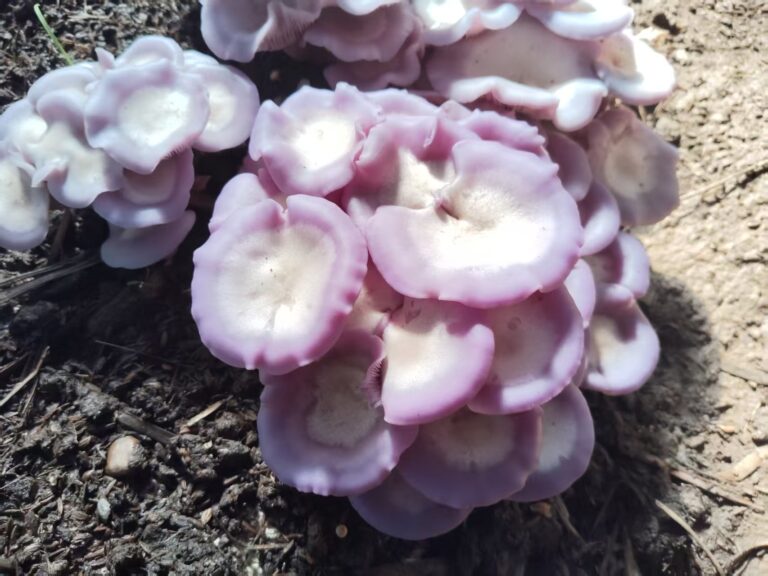
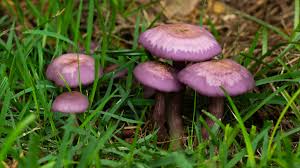
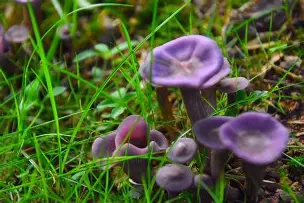
Among the many fascinating fungi that grace our forests and fields, the wood blewit stands out as both beautiful and mysterious. Scientifically known as Lepista nuda(and formerly Clitocybe nuda), this distinctive mushroom captivates foragers with its unique coloration, pleasant aroma, and culinary value. Often called the “blue-leg” or “violet” mushroom, it offers a rewarding challenge for those who learn to identify it properly.
Identification Features: Recognizing Wood Blewits
Proper identification is crucial when foraging for any wild mushroom. Wood blewits possess several distinctive characteristics:
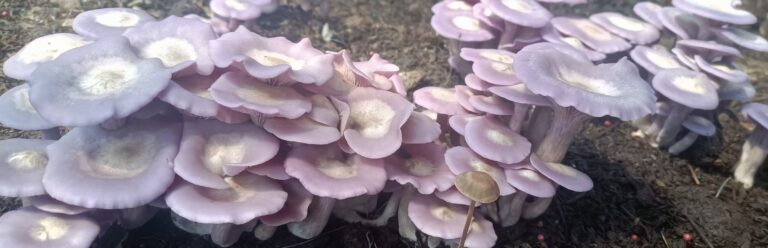
Cap:
- 5-15 cm (2-6 inches) in diameter
- Initially convex with an inrolled margin
- Matures to nearly flat, sometimes with a depressed center
- Smooth surface with a slight sheen when moist
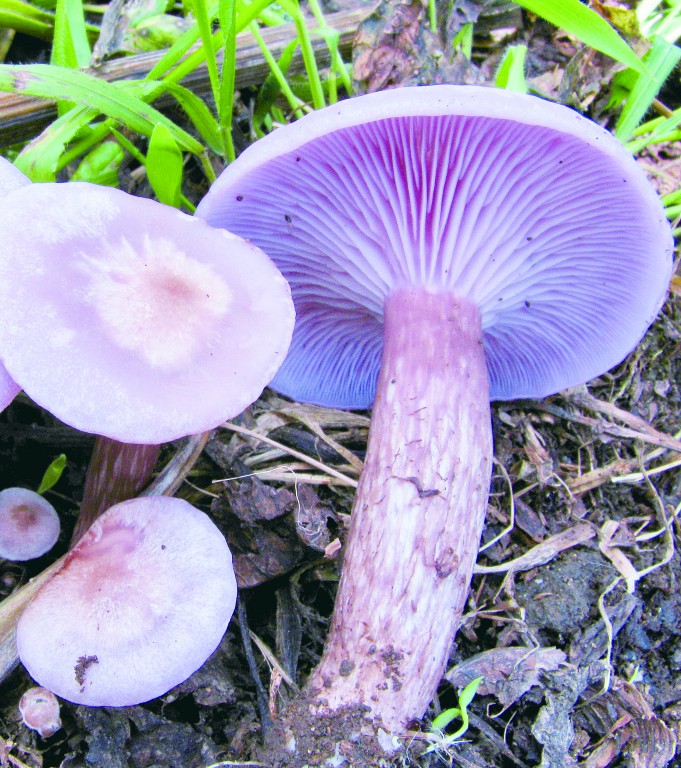
- Color ranges from lilac to violet-brown, fading with age
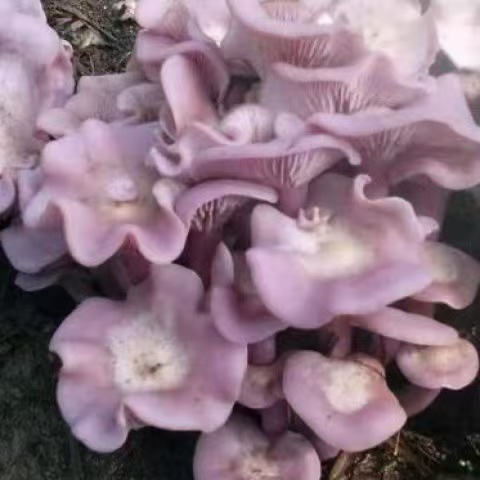
Gills:
- Crowded and sinuate (notched near the stem)
- Pale violet to lilac when young
- Mature to a buff or pale tan color
- Do not run down the stem
Stem:
- 4-10 cm (1.5-4 inches) tall
- Thick and sturdy, sometimes slightly swollen at base
- Same violet color as the cap, often fading
- Fibrous texture, sometimes with fine longitudinal lines
Flesh and Spores:
- Thick, firm, and pale lilac to white
- Mild, pleasant aroma reminiscent of orange juice or frozen orange concentrate
- Spore print is pale pink to buff
Habitat and Season: Where and When to Find Them
Wood blewits are saprotrophic, feeding on decaying organic matter. They typically grow in:
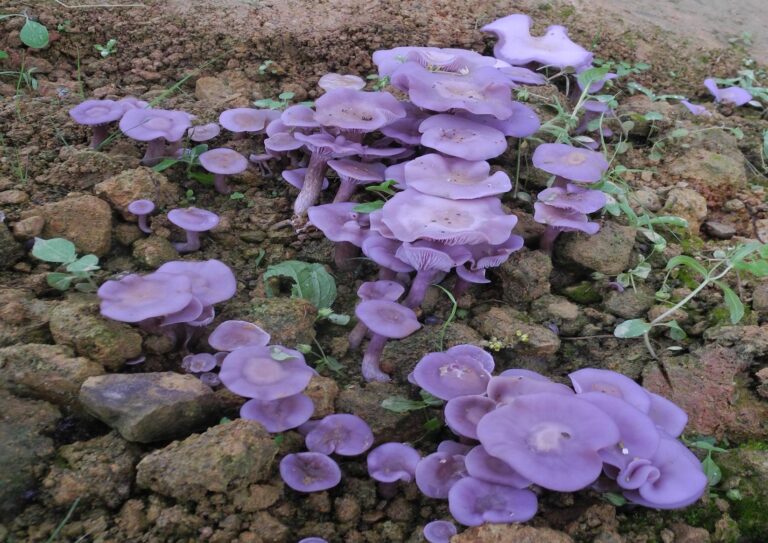
- Woodland edges and clearings
- Grassy areas near trees
- Gardens, parks, and hedgerows
- Often in fairy rings or scattered groups
Season: Late autumn to early winter, often appearing after the first frosts. In some regions, they may fruit in spring as well. They tolerate colder temperatures better than many other edible mushrooms.
Look-Alikes and Safety Considerations
Several mushrooms resemble wood blewits, making careful identification essential:
Similar Species:
- Cortinarius violaceus (Violet Webcap): Has a web-like cortina on young specimens and rusty brown spores
- Lepista saeva (Field Blewit): Grows in grassy areas without trees, stem base often stains yellow
- Lepista personata (Field Blewit variant): Has a more persistent veil
- Cortinarius species: Most have a distinctive cobweb-like partial veil and rusty brown spore prints
Key Safety Rule: Never consume any mushroom unless you’re 100% certain of its identification. When foraging wood blewits, always:
- Check for the pale pinkish-buff spore print
- Note the distinctive fruity aroma
- Confirm the gill attachment (notched, not decurrent)
- Observe the habitat (often near trees or in leaf litter)
Culinary Profile: Cooking with Wood Blewits
Wood blewits are prized for their culinary qualities, but require proper preparation:
Important Precaution: These mushrooms should always be cooked thoroughly before consumption. Some people may experience gastrointestinal discomfort from eating them raw or undercooked.
Flavor Profile:
- Mild, earthy taste with a hint of sweetness
- Firm texture that holds up well in cooking
- Pleasant aroma that enhances dishes
Preparation Tips:
- Clean gently with a brush or damp cloth
- Slice or chop as desired
- Sauté in butter or oil until thoroughly cooked
- Excellent in soups, stews, and sauces
- Pairs well with cream, garlic, thyme, and white wine
Preservation Methods:
- Sauté and freeze for long-term storage
- Drying (though this diminishes the flavor somewhat)
- Pickling in vinegar-based brines
Nutritional Benefits
Like many edible fungi, wood blewits offer nutritional value:
- Good source of dietary fiber
- Contains B vitamins
- Provides minerals including potassium and selenium
- Low in calories and fat
- Contains antioxidants
Foraging Ethics and Sustainability
Responsible foraging ensures these mushrooms continue to thrive:
Best Practices:
- Only collect what you can use
- Use a knife to cut the stem, minimizing soil disturbance
- Leave young specimens to mature and spread spores
- Use a mesh bag to allow spore dispersal as you walk
- Respect private property and protected areas
- Follow local regulations regarding mushroom collecting
Cultivation Possibilities
While wood blewits are primarily foraged from the wild, they can sometimes be encouraged to grow in suitable garden conditions by adding spawn to wood chip beds or compost piles. However, commercial cultivation is not as developed as for other mushroom species.
Traditional and Modern Uses
Throughout history, various cultures have utilized these mushrooms:
Historical Uses:
- Food source in many European countries
- Sometimes used in traditional medicine (though modern evidence is limited)
Modern Applications:
- Gourmet ingredient in professional and home kitchens
- Subject of mycological research
- Indicator species for environmental monitoring
Storing and Handling Fresh Blewits
To maximize freshness and safety:
- Refrigerate in paper bags (not plastic) for up to 5 days
- Clean just before cooking
- Cook thoroughly before tasting
- When trying for the first time, eat only a small amount to check for personal tolerance
Conclusion: A Rewarding Find for the Careful Forager
Wood blewits represent one of the more distinctive and rewarding finds for autumn foragers. Their striking violet hues, pleasant aroma, and good culinary qualities make them worth seeking out. However, their similarity to potentially dangerous look-alikes means that proper identification is absolutely essential. Always consult multiple reliable sources, consider joining a local mycological society, and never consume any wild mushroom unless you’re completely certain of its identity.
For those who take the time to learn proper identification, wood blewits offer a wonderful addition to the forager’s basket and the autumn table—a beautiful reminder of nature’s diversity and bounty.
External Link: For comprehensive information on mushroom identification, including detailed comparisons of similar species, visit the Mushroom Expert identification resources.