Purple Flower Face Mushroom: 7 Key Points to Identify the “Purple Elf” on the Inner Mongolia Grasslands
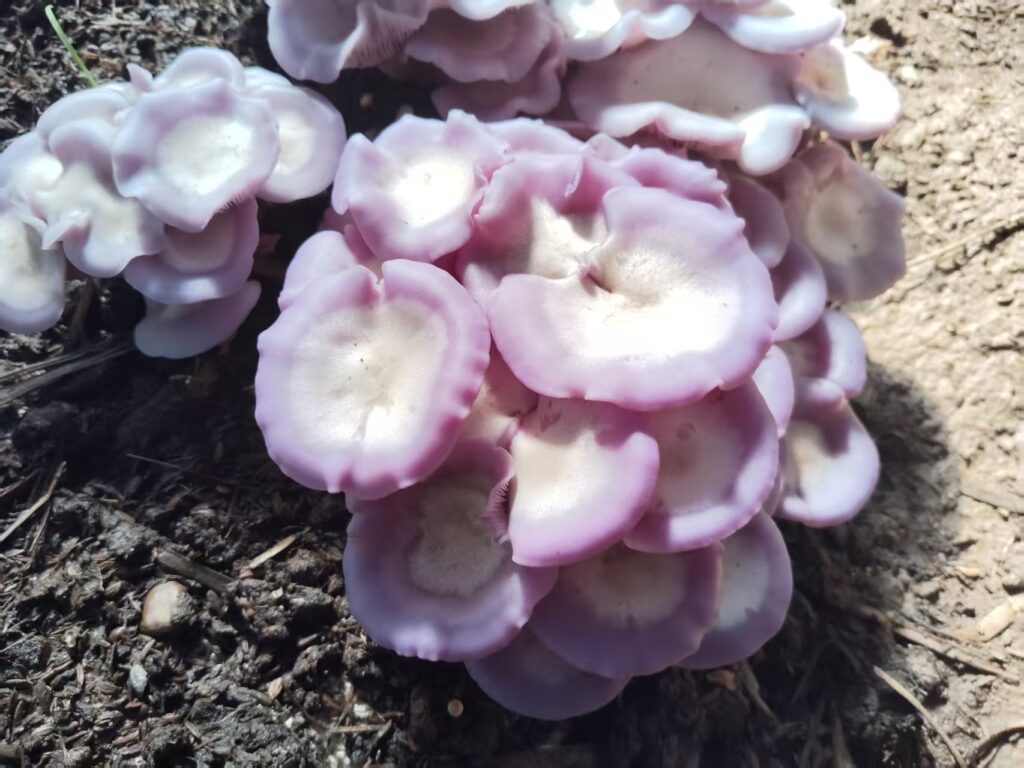
Purple Flower Face Mushroom (Scientific name: Lepista sordida), commonly known as Hua Lian Mo or Purple Crystal Lentinula, is a rare edible and medicinal fungus belonging to the Tricholomataceae family, genus Lepista. It is renowned for its unique violet-purple color, rich aroma, and delicious taste. It is widely distributed across grasslands and woodlands in regions such as Inner Mongolia, Northeast China, and Northwest China. For friends in Hohhot and the Inner Mongolia region, it is a common “wild delicacy” during summer and autumn. However, due to its bright color, it is often mistaken for a poisonous mushroom. This article will provide a comprehensive analysis of the identification features, nutritional value, cooking methods, and key safety鉴别 points of the Purple Flower Face Mushroom.
Table of Contents
- Morphological Characteristics of Purple Flower Face Mushroom: How to Accurately Identify It
- Growth Environment and Distribution of Purple Flower Face Mushroom
- Nutritional Value and Medicinal Efficacy of Purple Flower Face Mushroom
- Cooking Methods for Purple Flower Face Mushroom: 3 Home-style Recipes
- Toxicity Analysis of Purple Flower Face Mushroom: Safe Consumption Guide
- Current Status of Artificial Cultivation of Purple Flower Face Mushroom
- Harvesting and Preservation Techniques for Purple Flower Face Mushroom
Morphological Characteristics of Purple Flower Face Mushroom: How to Accurately Identify It {#h2-1}
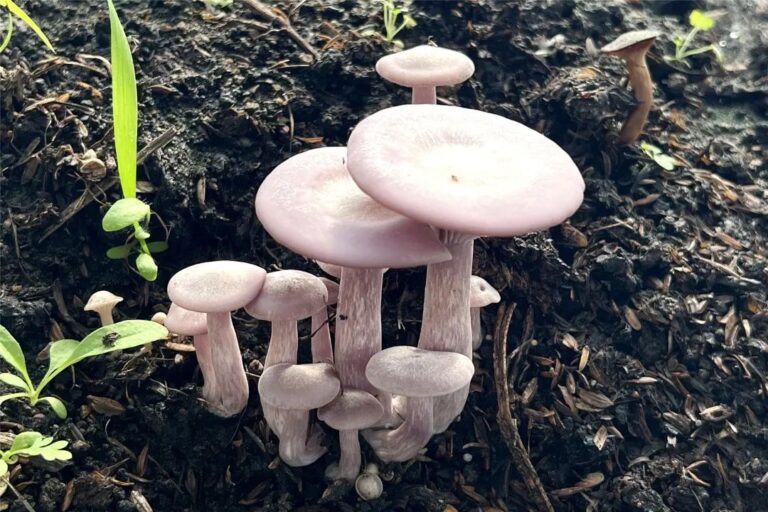
The fruiting body of the Purple Flower Face Mushroom is small to medium in size. Its most notable feature is its overall violet or lilac color, which can change with humidity.
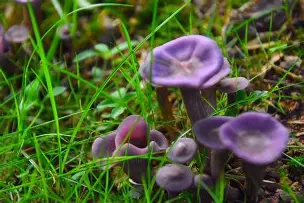
- Cap: Typically 3-8 cm in diameter. It is hemispherical or bell-shaped when young, gradually becoming flat or even slightly depressed in the center when mature. The cap surface appears translucent or water-soaked when wet, showing a bright violet color with an incurved margin and faint striations; it fades to tan or pale lilac when dry. The flesh is thin, pale purple, and soft in texture.
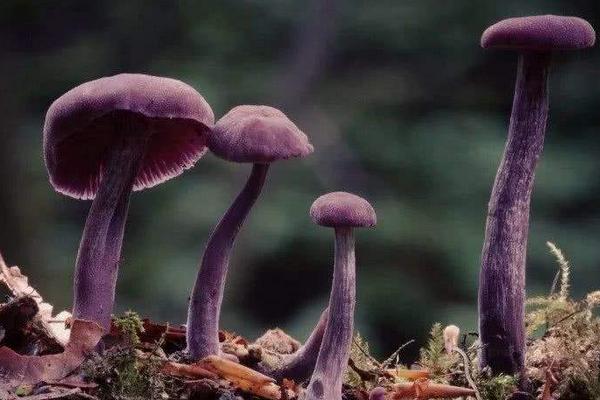
- Gills: The gills are adnate or slightly decurrent, spaced moderately to somewhat distantly. Their color is pale bluish-purple or pale lilac, which is one of the important features distinguishing it from toxic purple mushrooms.
- Stipe: The stipe is 3-7 cm long and 0.3-1.2 cm thick, cylindrical, colored similarly to or slightly paler than the cap. The base is often curved or slightly swollen, and the interior is solid.
- Spores and Odor: The spore print is pale pinkish. Fresh fruiting bodies have a strong, pleasant odor reminiscent of cloves or almonds, a typical characteristic of the Lepistagenus.
Growth Environment and Distribution of Purple Flower Face Mushroom {#h2-2}
The Purple Flower Face Mushroom is a terrestrial saprotrophic fungus that thrives in humus-rich soil. In Hohhot and surrounding areas of Inner Mongolia, it is commonly found in the following environments:
- Growing Season: Its main growing season is summer and autumn (June to October), with fruiting often abundant after rain.
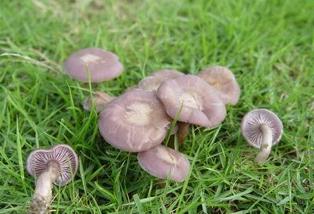
- Habitat: It typically grows in groups or clusters on grassy slopes, grasslands, forest edges, vegetable gardens, roadsides near villages, burned areas, and compost piles. On the Inner Mongolian grasslands, it often forms symbiotic or saprotrophic relationships with grasses.
- Distribution: Primarily found in temperate regions of the Northern Hemisphere. In China, it has been recorded in Inner Mongolia, Heilongjiang, Jilin, Gansu, Qinghai, Sichuan, Xinjiang, Tibet, Shanxi, and other regions. For residents of Hohhot, grasslands and woodlands in the suburbs are common places to find it.
Nutritional Value and Medicinal Efficacy of Purple Flower Face Mushroom {#h2-3}
Purple Flower Face Mushroom is not only delicious but also rich in various nutrients and bioactive components, offering both edible and medicinal value.
- Nutritional Composition:
- High in Protein: It contains high-quality plant-based protein with a complete range of essential amino acids, making it a good protein supplement.
- Rich in Dietary Fiber: Aids in intestinal peristalsis and promotes gut health.
- Contains Minerals and Trace Elements: Such as potassium, phosphorus, iron, zinc, and selenium.
- Source of Vitamins: Particularly B vitamins (like B1, B2) and vitamin D precursor.
- Low in Fat: Its fat content is very low, making it suitable for health-conscious individuals.
- Medicinal and Health Benefits:
- Antioxidant Effects: Rich in polyphenols and polysaccharides, it helps清除 free radicals and delay aging.
- Immune Regulation: Certain polysaccharides may enhance immune cell activity.
- Potential Anti-tumor Properties: Some studies suggest extracts may inhibit the growth of certain cancer cells (Note: This refers to experimental studies and is not a treatment claim).
- Traditional Use: In folk medicine, it is sometimes used to aid digestion and improve appetite.
External Resource Reference: For detailed information on the nutritional composition and potential bioactive compounds of fungi in the Lepistagenus, you can refer to research databases like PubMed. (This is a DoFollow link)
Cooking Methods for Purple Flower Face Mushroom: 3 Home-style Recipes {#h2-4}
Purple Flower Face Mushroom has a tender texture and a unique, fragrant aroma. Here are three simple and delicious home-style cooking methods. Before cooking, fresh mushrooms must be carefully cleaned to remove soil and debris.
1. Stir-fried Purple Flower Face Mushroom:
This is the simplest way to highlight its original flavor. Clean the mushrooms and tear them into strips by hand. Heat oil in a wok, add minced garlic and dried chili peppers until fragrant, then add the mushrooms. Stir-fry over high heat, season with salt and a dash of light soy sauce. Stir-fry until cooked through and the juices are released. Finally, add chopped green onions, give it a quick toss, and serve. The result is fragrant, savory, and delicious.
2. Purple Flower Face Mushroom and Egg Soup:
Clean the mushrooms and slice them. Beat 1-2 eggs. Bring water to a boil in a pot, add the mushroom slices and cook for 2-3 minutes. Slowly drizzle in the beaten egg to form egg ribbons. Season with salt and a little white pepper. Finally, add a few drops of sesame oil and chopped cilantro. The soup is light, fresh, and nourishing, perfect for autumn.
3. Steamed Purple Flower Face Mushroom with Minced Pork:
Clean the mushrooms and arrange them on a plate. Mix minced pork with minced ginger, chopped green onion, a little light soy sauce, oyster sauce, starch, and cooking oil, then spread it evenly over the mushrooms. Steam over high heat for 8-10 minutes. After steaming, sprinkle with chopped green onions. The mushrooms absorb the meat juices, making them incredibly flavorful and tender.
Internal Link Suggestion: If you are interested in other wild edible mushrooms from Inner Mongolia, such as Mongolian mushrooms or shepherd’s purse mushrooms, you can read our related introductory articles. (This is an example of an internal link)
Toxicity Analysis of Purple Flower Face Mushroom: Safe Consumption Guide {#h2-5}
This is the most critical part. While Purple Flower Face Mushroom itself is a recognized edible fungus, it is easily confused with some toxic purple mushrooms in the wild. Safe identification is paramount.
- Key Identification Features (Recap):
- Overall Color: Violet or lilac, fading when dry.
- Gill Color: Pale bluish-purple or pale lilac, not pure white or dark purple.
- Odor: Distinct and pleasant aromatic smell (like cloves/almonds), not pungent, chemical, or radish-like.
- Spore Print: Pale pinkish, not rusty brown, chocolate brown, or pure white.
- Common Toxic Look-alikes to Beware Of:
- Certain Cortinariusspecies (Webcaps): Many have purple hues but typically have a cortina (cobweb-like veil) on young specimens and often produce a rusty brown spore print. They lack the distinctive fragrance of Lepista.
- Certain Inocybespecies (Fiber caps): Some may have purplish tones but are generally smaller, with fibrous or scaly caps, and many contain muscarine, which is highly toxic.
- Entolomaspecies (Pinkgills): Some have purplish caps, but their gills are initially pale, becoming pink at maturity as the pink spores develop. Their spore print is salmon-pink, and they lack the fragrance of Lepista. Some are highly toxic.
- Golden Rules for Safe Foraging:
- 100% Certainty Principle: Only consume mushrooms you can identify with absolute certainty. When in doubt, throw it out.
- Comprehensive Identification: Do not rely on a single characteristic (like color). Use a combination of features: overall shape, gill attachment and color, stipe characteristics, presence/absence of a ring or volva, spore print color, habitat, and odor.
- Consult Experts: Beginners should forage with experienced identifiers or consult reliable field guides and local mycological societies.
- Trial Consumption: For any mushroom you are trying for the first time, even if identified as edible, consume a small amount initially to ensure no personal adverse reaction.
Important External Resource: For accurate identification and information on toxic mushrooms, consult authoritative field guides or websites like the Mushroom Expert (https://www.mushroomexpert.com) or your local mycological society’s website. (This is a DoFollow link pointing to an external resource)
Current Status of Artificial Cultivation of Purple Flower Face Mushroom {#h2-6}
Currently, the large-scale commercial artificial cultivation of Purple Flower Face Mushroom is not yet mature or widespread, unlike common cultivated mushrooms such as button mushrooms or shiitake. The main sources in the market are still wild-harvested.
- Cultivation Difficulties:
- Specific Growth Requirements: It has certain demands for the soil microbiome, temperature, and humidity, making the cultivation environment difficult to replicate perfectly.
- Slower Growth Cycle: Compared to some fast-growing cultivated varieties, its growth cycle might be longer, affecting economic efficiency.
- Limited Research: In-depth research on its mycelial growth characteristics, optimal substrate formulation, and fruiting conditions is still relatively limited.
- Research and Prospects:
- Some research institutions and enterprises are conducting cultivation experiments, attempting methods like greenhouse simulation of the wild environment or substrate cultivation.
- With increasing market demand and rising prices, research and development in cultivation technology are expected to progress.
- Successful artificial cultivation would help protect wild resources and allow more people to enjoy this delicacy safely.
Harvesting and Preservation Techniques for Purple Flower Face Mushroom {#h2-7}
Proper harvesting and preservation are key to maintaining the flavor and nutritional value of Purple Flower Face Mushroom.
- Harvesting Tips:
- Timing: Choose fresh, intact, insect-free young and medium-aged fruiting bodies. Overly mature specimens may have a poorer texture.
- Method: Use a knife to cut the base of the stipe, trying to keep the “mushroom root” (mycelium) in the soil to facilitate regrowth. Place them gently in a breathable basket; avoid using plastic bags, which can cause bruising and spoilage.
- Preservation Methods:
- Short-term Fresh Keeping (1-2 days): Place in a breathable container or paper bag in the refrigerator vegetable crisper. Do not wash before storage.
- Drying: This is the most common and effective method. Clean the mushrooms, thread them on a string, and dry in a well-ventilated, shady place or with a food dehydrator at low temperature. Dried mushrooms have a concentrated flavor and can be stored for over a year in a sealed container in a cool, dry place. Rehydrate before use.
- Freezing: Blanch cleaned mushrooms in boiling water for 1-2 minutes, then quickly cool in ice water. Drain, pack into portions, and freeze. This better preserves the texture and flavor.
- Pickling or Oil-preserving: Can be processed into pickles or preserved in oil, creating a different flavor profile.
https://example.com/purple-flower-face-mushroom.jpgImage alt text: Purple Flower Face Mushroom growing wild in grassland
Conclusion
Purple Flower Face Mushroom, the “Purple Elf” of the grasslands, is a gift from nature with its unique color, delightful aroma, and rich value. Correct identification is the first step to safely enjoying this delicacy. Through this article, we hope you have gained a comprehensive understanding of its appearance, habitat, consumption, and safety. Whether foraging in the wild or purchasing at the market, always prioritize safety. We look forward to continued progress in the research on its artificial cultivation, allowing this beautiful and delicious mushroom to be enjoyed by more people in a sustainable way.